Brevo Pricing 2025: A Complete Breakdown of Costs, Plans & Value
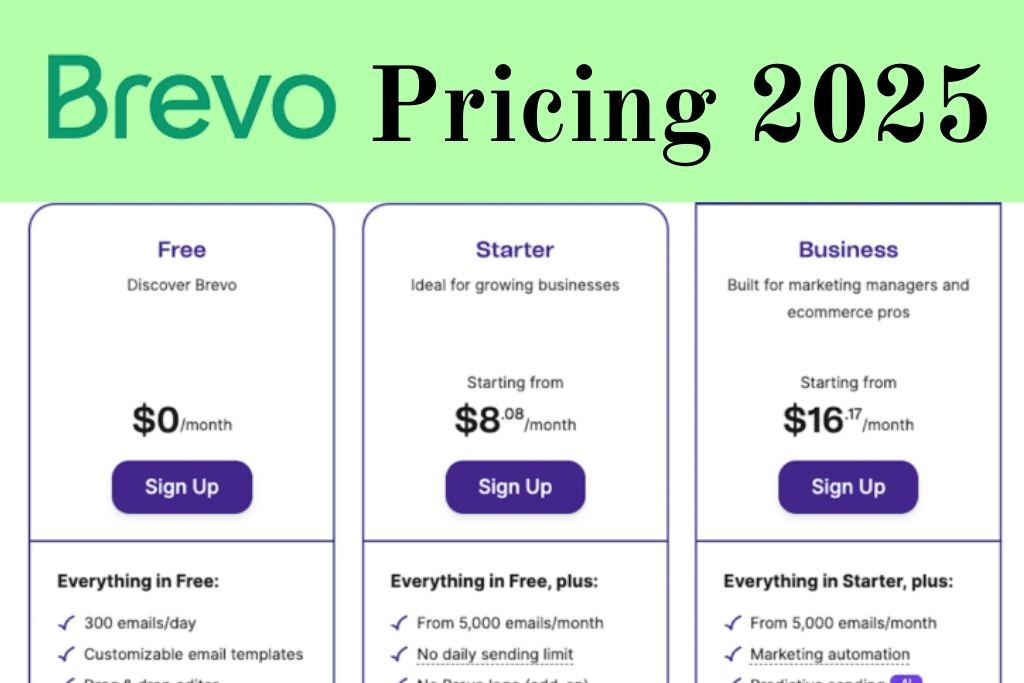
Understanding Brevo’s pricing structure is essential before you launch email campaigns, automate marketing, or manage lists. This article explains Brevo Pricing in depth, comparing plans, features, add-ons, and helping you decide which plan fits your needs — whether you are a solo freelancer, small business, or large enterprise.
Why Brevo Pricing Matters: Flexibility, Scalability and Value
When evaluating email marketing or marketing-automation tools, cost is rarely just about the monthly fee. You need to consider how many emails you send, how many contacts you store, what features you need (automation, segmentation, landing pages, multichannel messaging), and whether the cost scales reasonably as you grow. Brevo’s pricing model aims to be flexible — based on email volume rather than strictly per-subscriber — which often results in lower cost for large contact databases.
Because of this pricing method, “Brevo Pricing” becomes strategic: you pay for what you use, rather than paying a fixed high fee for a large contact list. That makes it especially appealing for businesses with large audiences but low email frequency, or seasonal marketing campaigns.
What Influences Your Brevo Cost: Understanding Pricing Variables
Several factors influence what you actually pay under the banner of “Brevo Pricing.” Understanding them helps you optimize your costs:
- Email Volume per Month: The number of emails you send in a month directly impacts plan tier. Higher volume → higher cost.
- Contact List Size vs. Activity: Brevo’s pricing emphasizes sent volume, not just number of contacts — beneficial if many contacts are inactive.
- Required Features: Automation workflows, A/B testing, landing pages, multi-channel campaigns (SMS, WhatsApp, push notifications), multi-user access — all add more value (and sometimes cost).
- Branding & Extras (Add-ons): Removal of Brevo logo, dedicated IP, extra marketing seats, extra push-notification subscribers — these are optional add-ons that can increase the final bill.
- Frequency and Consistency of Campaigns: High-frequency senders or large email blasts will need higher-tier plans to avoid overage or repeated add-on purchases.
- Support Level & Account Management Needs: For enterprises needing custom support, dedicated IP, sub-accounts, or security compliance, the Enterprise plan (custom quoted) is recommended.
Read More: How to use Brevo Email Marketing: Step-by-Step Process
Pay-As-You-Go & Credits: Flexibility for Intermittent Users
If you don’t send emails regularly — say seasonal newsletters, occasional promotional blasts, or sporadic announcements — Brevo offers prepaid email credits rather than a full monthly plan. This model is useful when you want flexibility without monthly subscription overhead.
| Credit Pack | Typical Use Cases | Advantage |
| 5,000 – 100,000 email credits | Occasional campaigns, small newsletter blasts, testing | Pay only per email without monthly subscription |
| 100,000 – 1,000,000 credits | Bulk sends or one-time large campaigns | Cheaper per-email cost vs. smaller packs, and credits never expire |
This pay-as-you-go approach allows marketers to scale up during busy periods (e.g. sale season) and scale down when not needed — saving costs overall.
Hidden Costs & Add-Ons: What You Must Watch Out For
“Starting at $9/month” or “$18/month” often sounds cheap, but real-world usage can add overhead. Below are common extras to keep in mind:
- Branding Removal: On Starter plan, removing “Sent with Brevo” branding may require extra fee.
- Dedicated IP: Necessary for large senders wanting stable deliverability. Available only as add-on in mid-level plans; costs extra annually.
- Additional Marketing Seats / Users: If your team grows, adding more users increases cost per seat.
- Push-notification / Web-push Extras: Larger campaigns using web or mobile push may need extra credits/subscribers.
- SMS / WhatsApp Credits: If you send SMS or WhatsApp messages, costs vary by country and message type — they’re separate from email pricing. Brevo
Therefore, evaluating total cost of ownership requires you to factor in both base plan and realistic usage pattern including extras.
Which Brevo Plan Should You Choose? A Quick Decision Guide
Depending on your needs — frequency of emailing, list size, features needed — here’s a quick recommendation:
- You’re a beginner or small blogger / freelancer: Start with the Free Plan. It lets you test email marketing features, send limited emails, and gradually build a contact list.
- Small business with occasional newsletters / marketing emails: The Starter Plan is cost-effective and covers basic needs — especially if monthly email volume is low.
- Growing business with regular campaigns, automation & segmentation needs: The Standard / Business Plan offers best balance between cost and marketing features.
- E-commerce store, active marketing agency, or company with large subscriber base: The Professional Plan provides advanced tools — automation, multi-channel messaging, analytics, and scalability.
- Large enterprise, multiple sub-brands, high email volume & complex workflows: Go for Enterprise Plan — get custom pricing and tailored support to meet your needs.
Also, if your email volume is sporadic or seasonal, consider pay-as-you-go credits — flexible and often more cost-efficient.
How Brevo’s Pricing Compares to Competitors & Why It Often Stands Out
Many email marketing services charge primarily based on contact count — meaning if you have a large subscriber list, you pay more even if you email infrequently. In contrast, Brevo’s volume-based pricing (emails sent) often offers better value, especially when:
- You have many contacts but low sending frequency
- You run bursts of campaigns, not consistent monthly newsletters
- You want multichannel communication (email, SMS, WhatsApp, push) under one roof
This flexibility makes Brevo a strong choice for users seeking scalability without skyrocketing costs, especially compared to traditional pricing models of many competitors.
Tips to Optimize Costs When Using Brevo Pricing Model
If you decide to use Brevo, here are some smart strategies to maximize value and minimize costs:
- Clean up inactive contacts — Since you’re billed per email, avoid emailing unengaged contacts often to reduce volume.
- Segment your list carefully — Send relevant emails only to interested subscribers, reducing wasted sends.
- Use pay-as-you-go credits for occasional campaigns — Useful if you only email during special events or sales.
- Remove branding only when necessary — On Starter plan, skip logo removal if branding is acceptable, to save extra fee.
- Monitor volume vs plan tier periodically — Adjust plan or credits depending on monthly usage to avoid overpaying.
- Use automation wisely — Trigger-based workflows (welcome series, cart abandonment) often lead to higher engagement and better ROI compared to mass blasts.
Conclusion: Is Brevo Pricing Worth it in 2025?
Brevo offers a flexible, volume-based pricing model that makes it well-suited for a variety of users — from solo freelancers to large enterprises. Its structure allows you to pay based on what you use, rather than inflated fees for large contact lists. With its combination of email marketing, automation, CRM features, multichannel messaging (SMS, WhatsApp, push), and scalable plans, Brevo delivers high value — especially if you take time to optimize usage and avoid unnecessary sends or extras.
If your business values scalability, cost-efficiency, and flexibility in communication (email + other channels), then Brevo Pricing offers a compelling solution in 2025.